
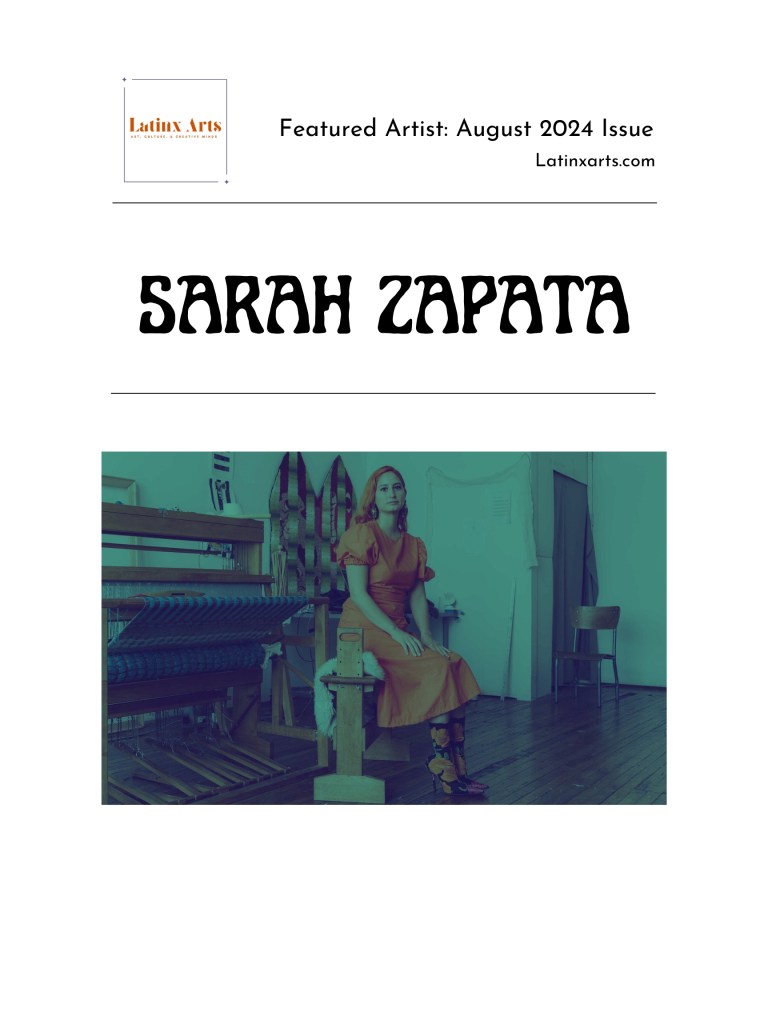
Zapata (she/her) is a Texas-born textile artist who resides in NYC and teaches at Yale University. As a first-generation Peruvian-American queer Latinx, her works are abstractions of personal experience. She incorporates patterns and pre-colonial traditions in her works, more specifically from the Paracas and Nazca cultures of Peru. Zapata is purposeful when it comes to her use of color and space, inviting the public to experience a rather delicately known medium on a larger scale, revamping fiber art produced by Latinx artists.
Many first-generation Latinx/os experience the perplexing phenomenon of teetering between two different cultural identities […]




Writer’s Commentary
Many first-generation Latinx/os experience the perplexing phenomenon of teetering between two different cultural identities, as seen in the iconic, The Two Fridas, painted by Frida Kahlo in 1939. Zapata applies her own experience of this duality by connecting the fibers of her South American roots and the American environment the artist was raised in.
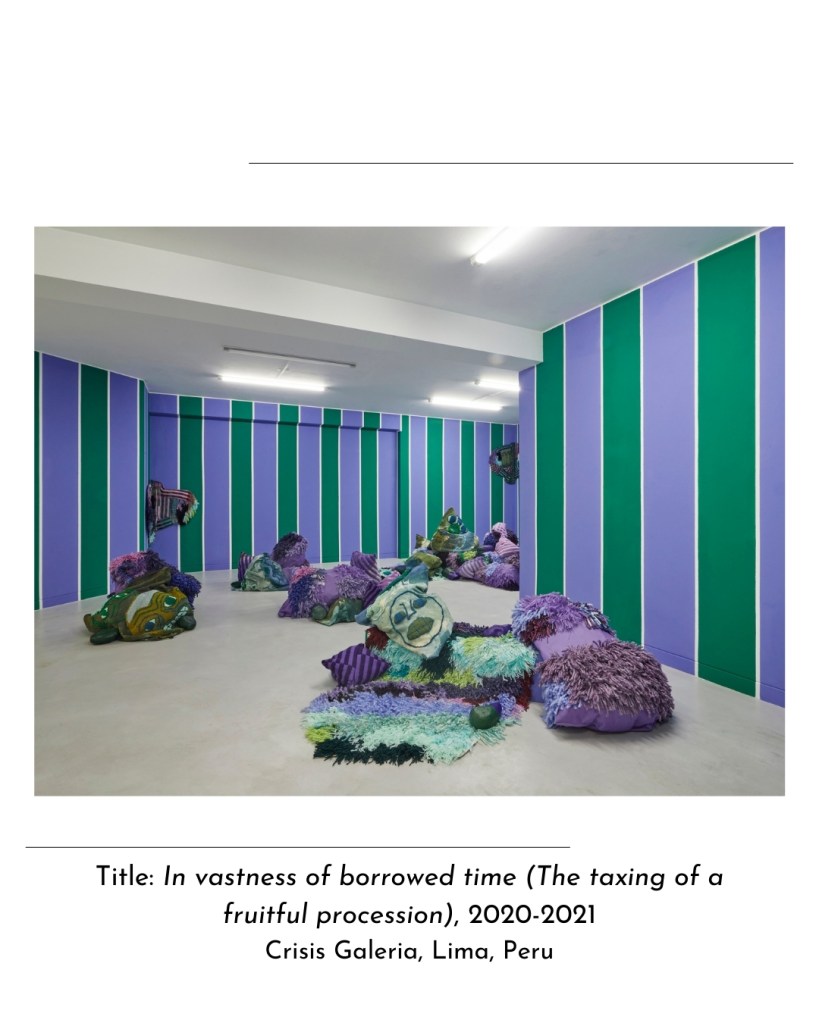
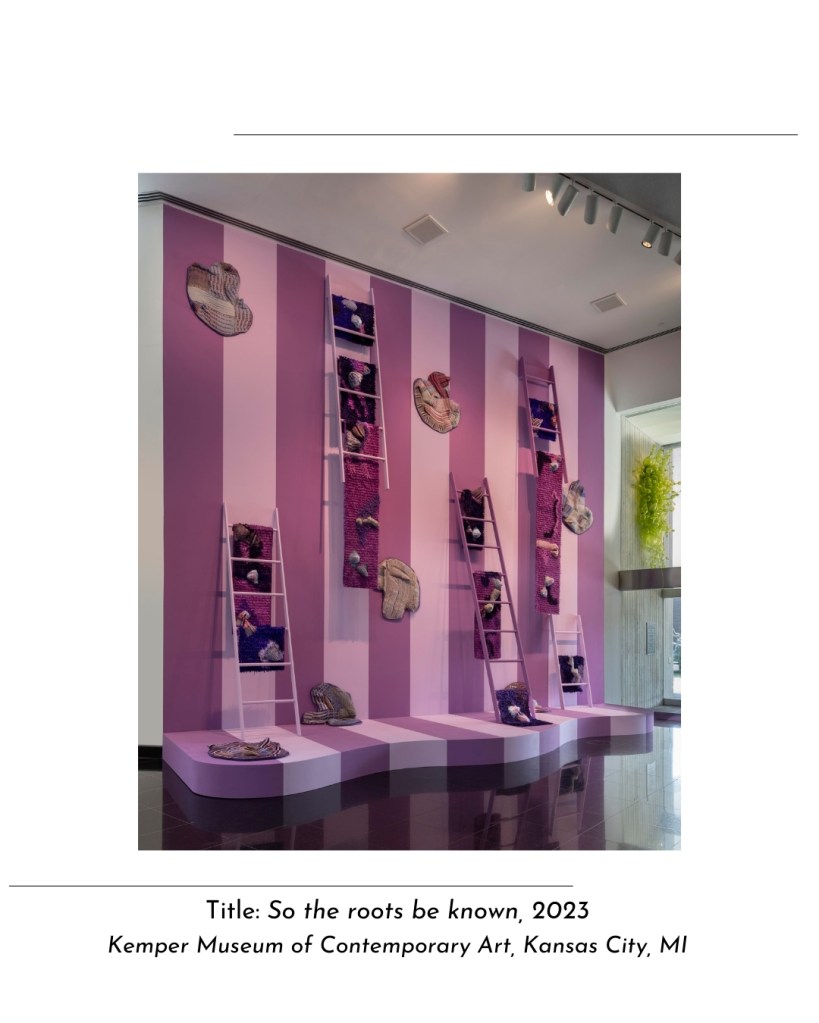
Although Zapata works within the abstract style, symbolism is used boldly throughout her works, amplifying the myriad of fabric and colors she utilizes throughout the scope of her career. In the artist’s installation pieces, the vibrant hues and woven patterns extend beyond the efforts of the loom. This creates dimensionality for this medium, adding an additional layer of texture through pre-existing architectural elements that houses Zapatas’ work.

The history behind textiles is often referred to as a traditional craft which in previous eras, was pertinent for cis-women to learn, at the time an essential life skill for domestic duties. Although the utilitarian nature of this craft left little room for artistic expression, weavers and makers achieved artistry by allowing form to follow its function. Zapata uses the medium’s history to elevate the magnitude said textiles can amount to, contrary to its delicate nature. It is truly impressionable to see such heavy and large scale works stitched together by something as fragile as a thread.
Sarah Zapata has exhibited internationally and continues to grow both in her own practice, as well as sharing her knowledge in a collegiate setting.
If you’d like to explore more of Zapata’s works on their Instagram or on their website.

 Latinx Arts