


Báez (she/ella) is an Afro-Caribbean and Afro-Latino/x artist who lives and works in New York, producing a magnitude of oeuvres that speak to the African diaspora through her dream-like style.
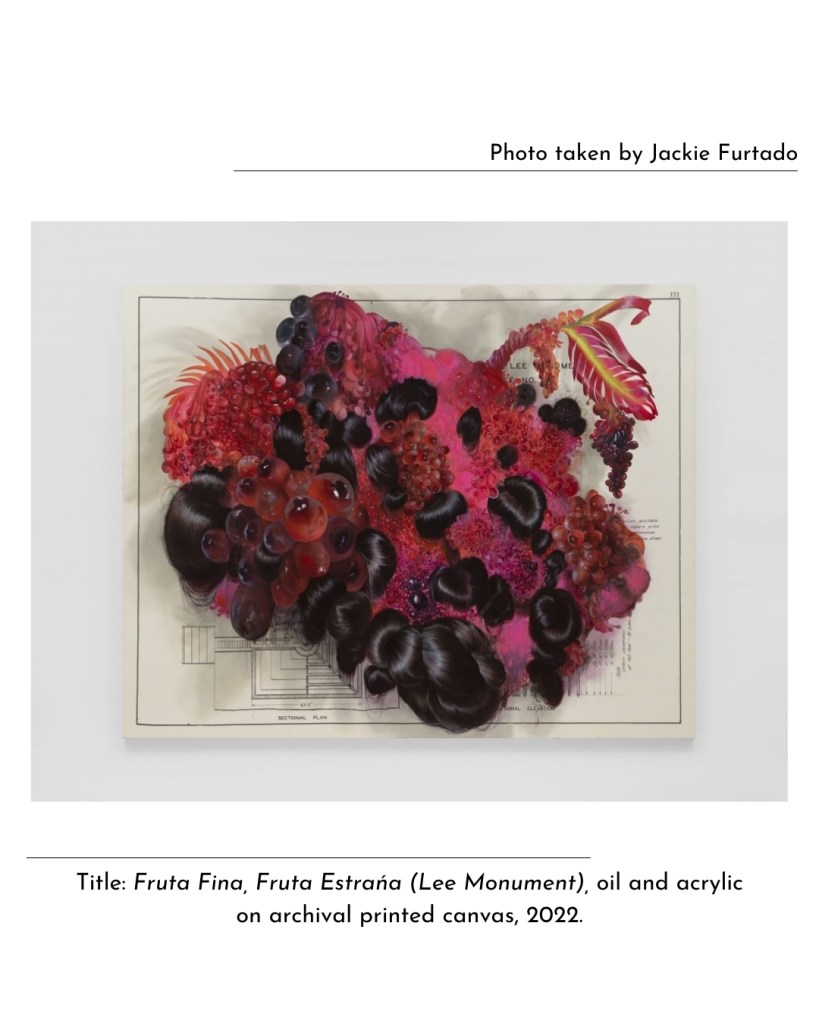
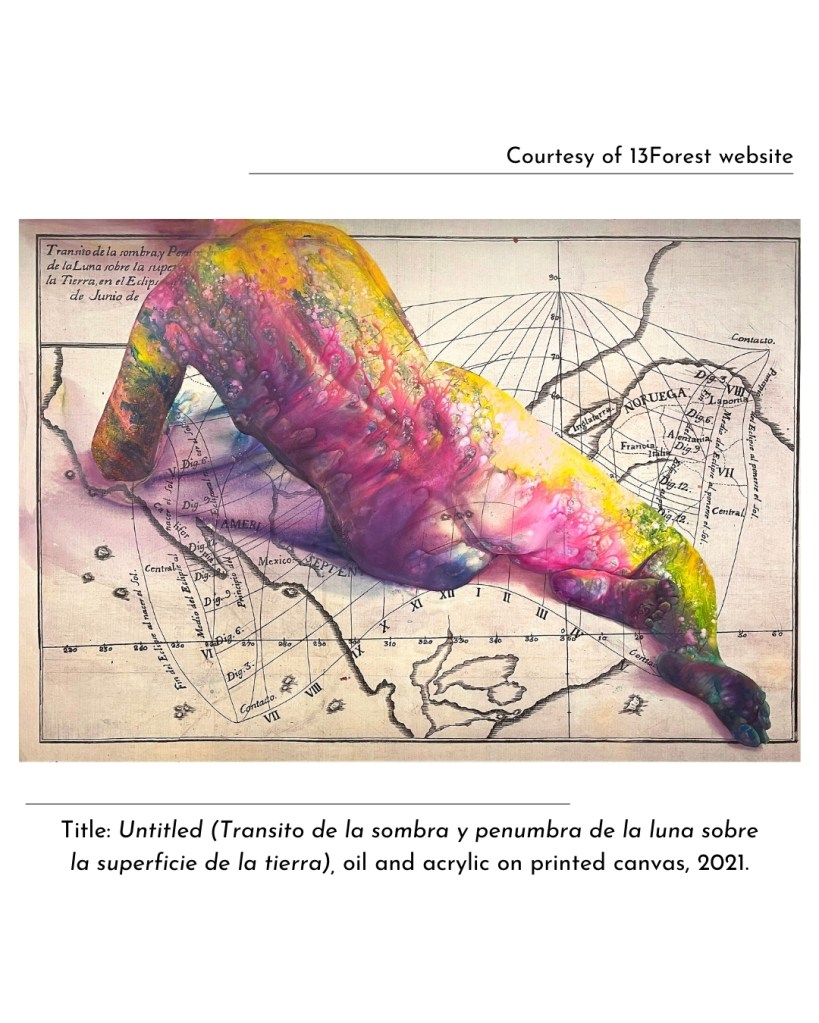
The artist often uses archival maps that were used during the colonization period as a base for their works, linking the past and present together. Báez’s figures, often faceless and in mid-transformation, take on an anthropomorphic personaje (persona), representing Afro-Caribbean, Dominican, and Afro-Latino/x folklore.
A personal belief of mine is: most problematic occurrences in society can be traced back to colonialism.


Writer’s Commentary
What makes Firelei Báez’s visual imagery so captivating is the historical basis there is behind every art piece. Báez’s way to represent this philosophy in her work with the use of cartography being the base of her paintings. By utilizing geographically biased maps of “non-western” worlds, it places the viewer in both the past and present; and this is only the first layer.

One may think, “Why is it necessary to bring up the past?”. For context, Báez and her family are first-generation Domnicans who moved to the states in the earlier part of the artist’s life. Much like most Caribbeans, the group still feels the effects of the past in their present; such as, exploitation of their land for tourism.
A personal belief of mine is: most problematic occurrences in society can be traced back to colonialism. For example, food insecurity is a long-term result of colonization. Indigenous people around the world had community-based trading methods that ensured a distribution of goods among the people. The philosophy being: if the people are doing well, society as a whole is doing well. Now one can currently take a look at the world at large: that is most definitely not the case. Whether it be cities and or rural areas, there is a huge gap in wealth; wealth means access to goods and food.

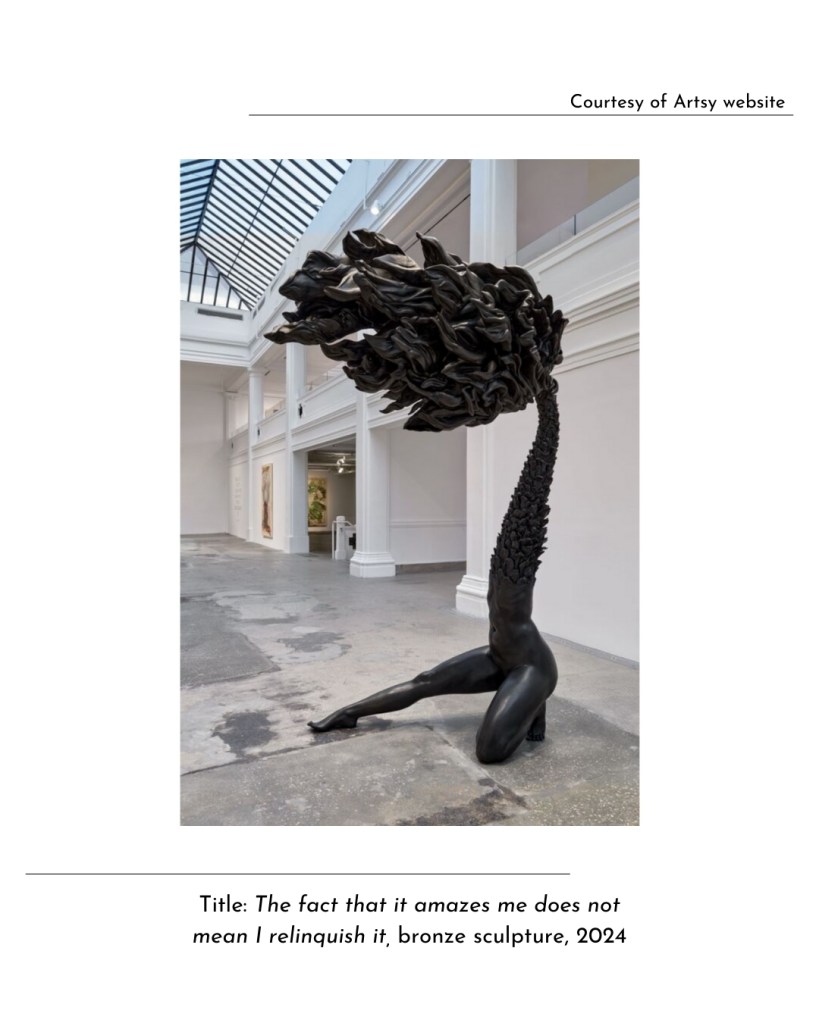
In her bronze sculpture, The fact that it amazes me does not mean I relinquish it, 2024 (pictured above), the figure is in mid-transformation from, or even towards, the human form to what appears to resemble the likeness of a palm tree. Báez succeeds at using a motionless medium for a snapshot of a mystical transcendence. This piece nods knowingly towards the dream-like state of surrealism and the theatrics of the baroque era.
Lastly, Báez’s own experience as a Dominican is seen throughout her portfolio, often alluding to feminine attributes of Afro-Latino/x cultural expression such as fabric, hair, and feathers. The artist uses headscarves and intricate hairstyling for the femme-figures in her works, presenting the empowerment in Afro-Identity and resilience that is found in black hair. The colors and adornments that accompany these hairstyles are as symbolically calculated, just as the context in which Báez curates her work to be viewed at.
Firelei has exhibited her works internationally and curates the symbolism in her works for the context they will be experienced in by the masses. The artist holds a BFA and an MFA, continuously speaks about her work at institutions across the world, and is featured in various articles for her mastery of brilliant colors and the re-telling of present histories.
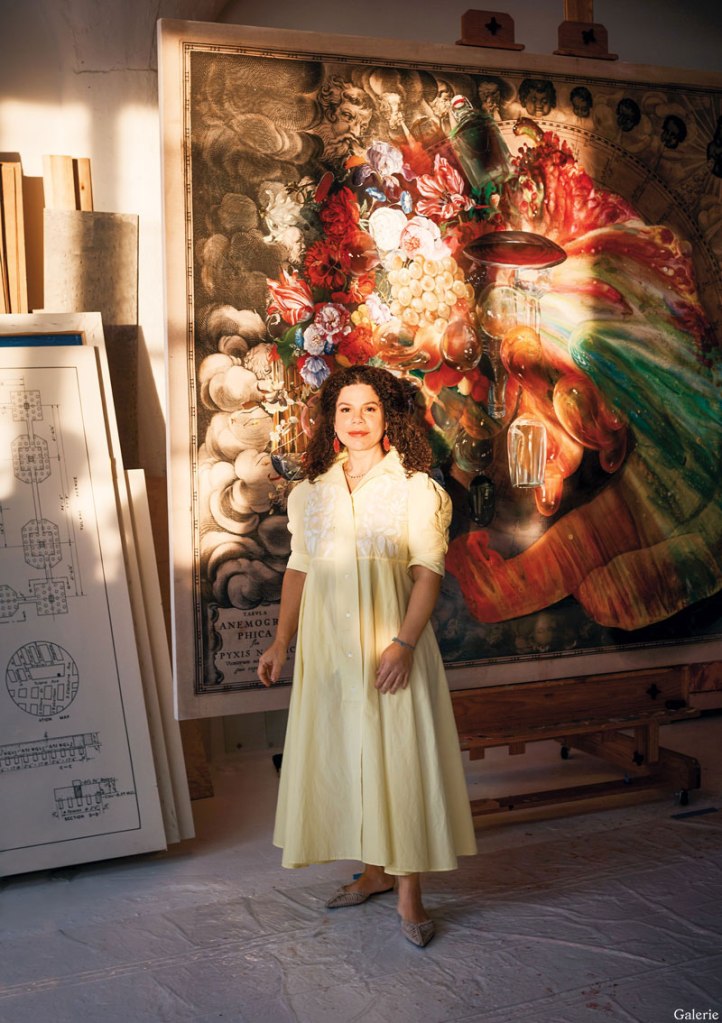

If you’d like to explore more of Báez’s work please check out their Instagram: @fireleibaez
Disclaimer: All images shown are the artistic property of the individuals who captured them.
 Latinx Arts