
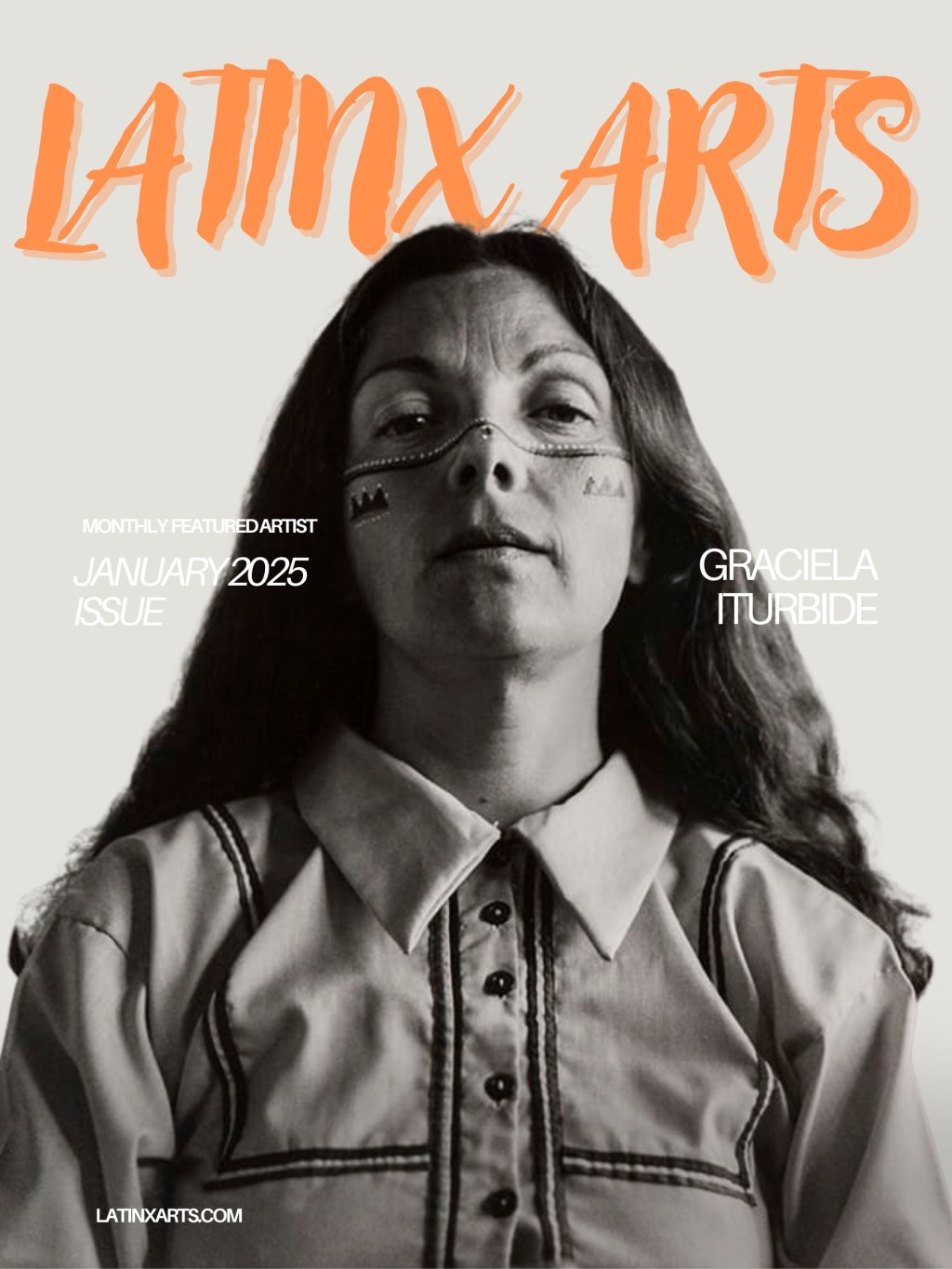
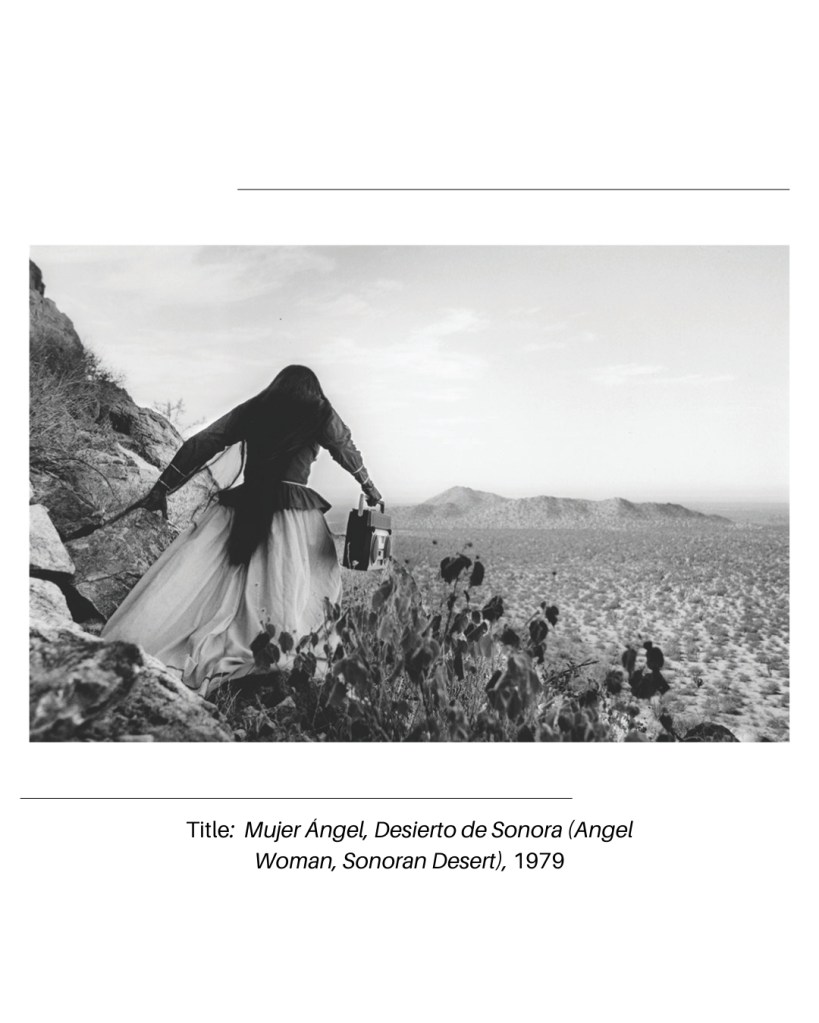
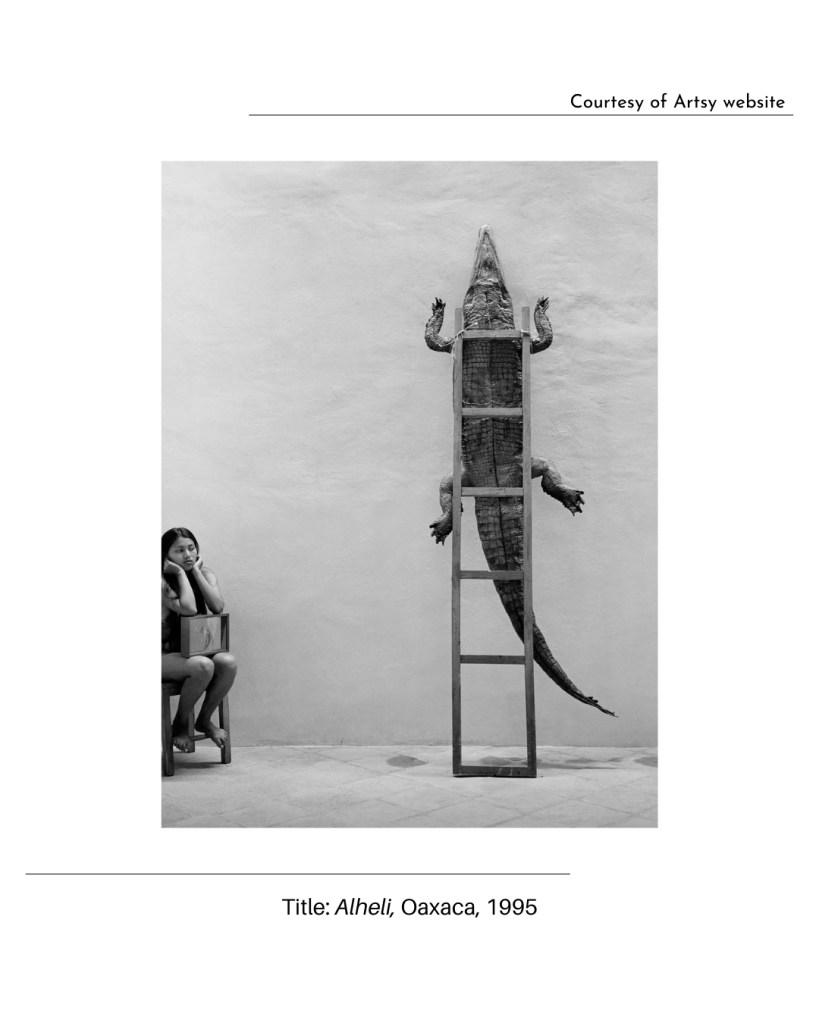
Iturbide (she/ella) is a world-renown Mexican photographer who captures the poetic cadencia (cadence) that echoes throughout México, specifically resonating with Indigenous pueblos. Iturbide’s initial interest in film led the artist to her mentor, Manuel Álvarez Bravo (el Maestro), who influenced Graciela’s photo-journalistic approach with communities.
The photographer’s entire scope of work is an endearing love-letter to México, one that we are able to see through the lens of her camera. Graciela traveled throughout her country and even to East Los Angeles, learning about the people and the various ways in which la cultura (the culture) is expressed by los hijos/x de México (the children of México). The compositions behind her most iconic images are regarded by the artist as pure happenstance. The artist affirms that their work is only possible due to the privilege of being welcomed as an outsider to respectfully capture these extracted moments de la cultura (of the culture).
La fotógrafa Mexicana (the Mexican photographer) presents us with an unbiased and charming collection of narratives of groups who have historically felt the caste systems in México.


Writer’s Commentary
As we settle into this tumultuous new year, we collectively decide a reinvention of self or even routines are needed. The reason this well-known photographer has been chosen to be the first featured artist for the new year is because of the idea of “new”. Having first been introduced to her work in my “Women in Art History” course some years ago, I had not known of her series of photographs taken of the Chicano/x culture in East Los Angeles during the mid-nineteen eighties. The collection went on to be published in 2024, after being revisited and re-captured decades later in 2018 – 2019. Thus, a “new” perspective of Graciela Iturbide has been unveiled before my already impressed eyes.

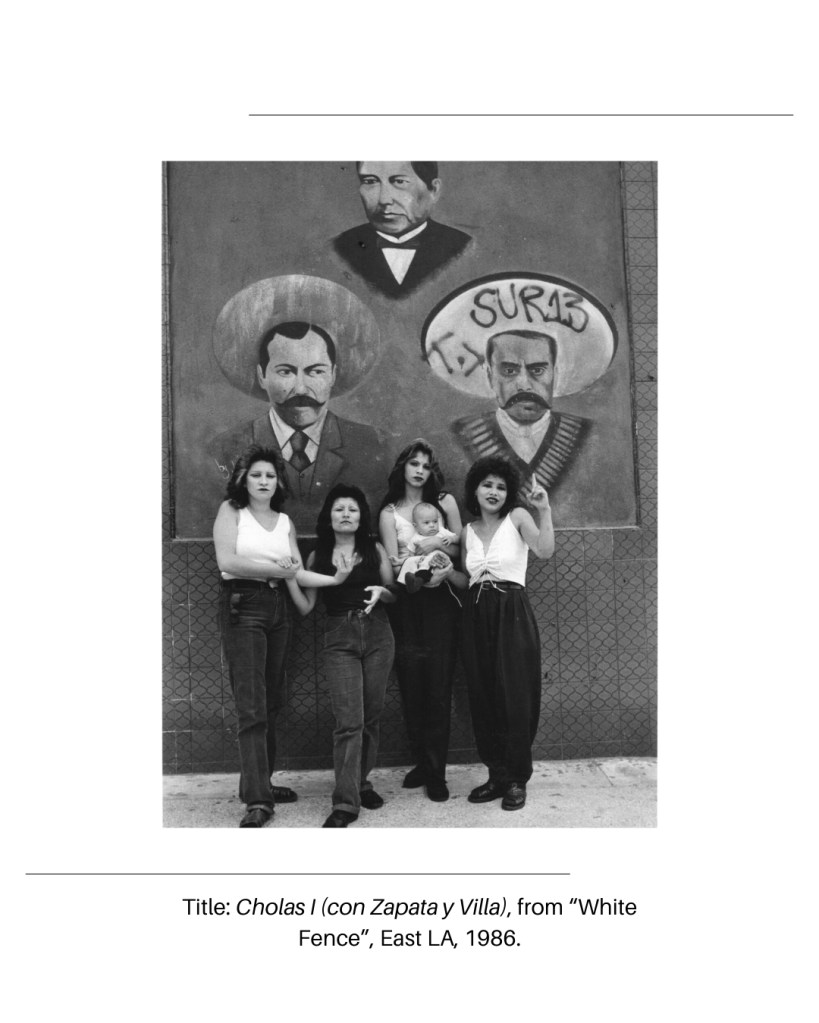
Having experienced the cinematographic impression that Iturbide’s photographs have on a viewer, I was delighted that this was translated to the White Fence project. The project’s title derives from the infamous “White Fence” street gang that assumed dominance over the Boyle Heights neighborhood. However, despite the history of violence, the subject of the portraits are the individuals, los Chicanos/x (the Chicanos/x).Stereotypes aside, there is a distinct and iconic look of a Chicano/x. It is also important to understand, a cholo/x (or xolo/x) are mentioned in these works, but is an identifier that is closely related to gang culture, not specific to Chicanismo/x. In other words, not all Chicanos/x are cholos/x, and vice versa. With that being said, the series allows today’s viewer’s to recall their own personal memories, projecting their own family as the subject in the White Fence series.

Take for example the photograph, Mother and Child, East LA, 1986 (pictured on the left). The picture itself is striking, with the mother and nestled child forming the classical pyramidal composition. To some, the maternal figure may represent la Virgen de Guadalupe (Virgin Mary) and the infant representing Jesus Christ, both major symbols for Chicano/x culture. In this image, we see la Chicana/x (the Chicana/x) applying her makeup, while her child appears to be mid-cry. Iturbide shows us the importance of physical appearance held in this moment in time for this new mother, who embodies East Los Angeles culture and the generations to come.
La fotógrafa Mexicana (the Mexican photographer) presents us with an unbiased and charming collection of narratives of groups who have historically felt the caste systems in México. Although, considering the past few years, México’s last and current president have pushed to address this issue that is rooted in colorism. That is to say: both Indigenous Peoples and Chicanos/x are historically not considered nor treated as “real” Mexicanos because of the nuances of imperialistic aftershock.
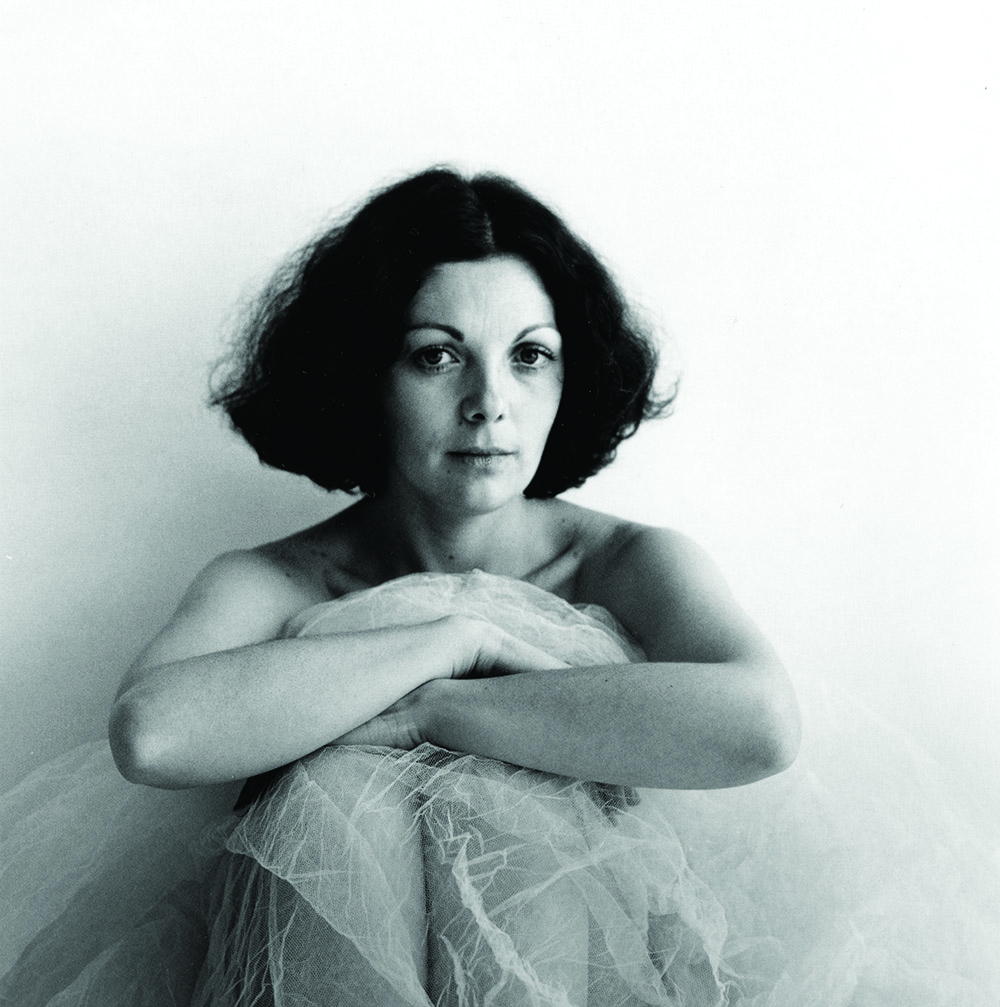
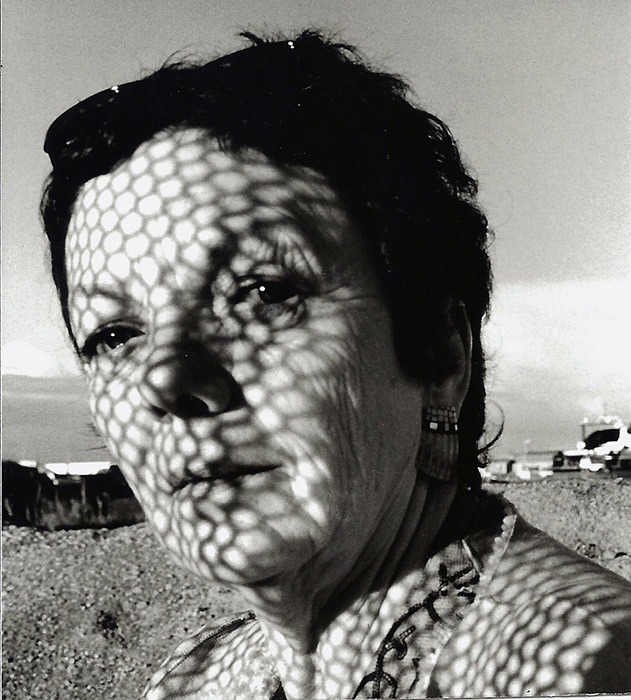
Graciela’s work has been regarded around the world as a close-up of the cultural richness of the people of México. Notable accolades include: the Fine Arts Medal for 45 years of an artistic career (2014), New York Cornell Capa Award (2015), Hasselblad prize from Sweden in (2008) ((this is considered the Nobel Prize for Photography)), and was inducted into the International Photography Hall of Fame at a ceremony (2022).

If you’d like to explore more of Iturbide’s work please check out their Instagram: @gracielaiturbide.
Disclaimer: All images have been taken directly from the artist’s social media page and are the artistic-intellectual property of the individuals who captured them. Latinx Arts use of imagery are purely for educational purposes.

 Latinx Arts